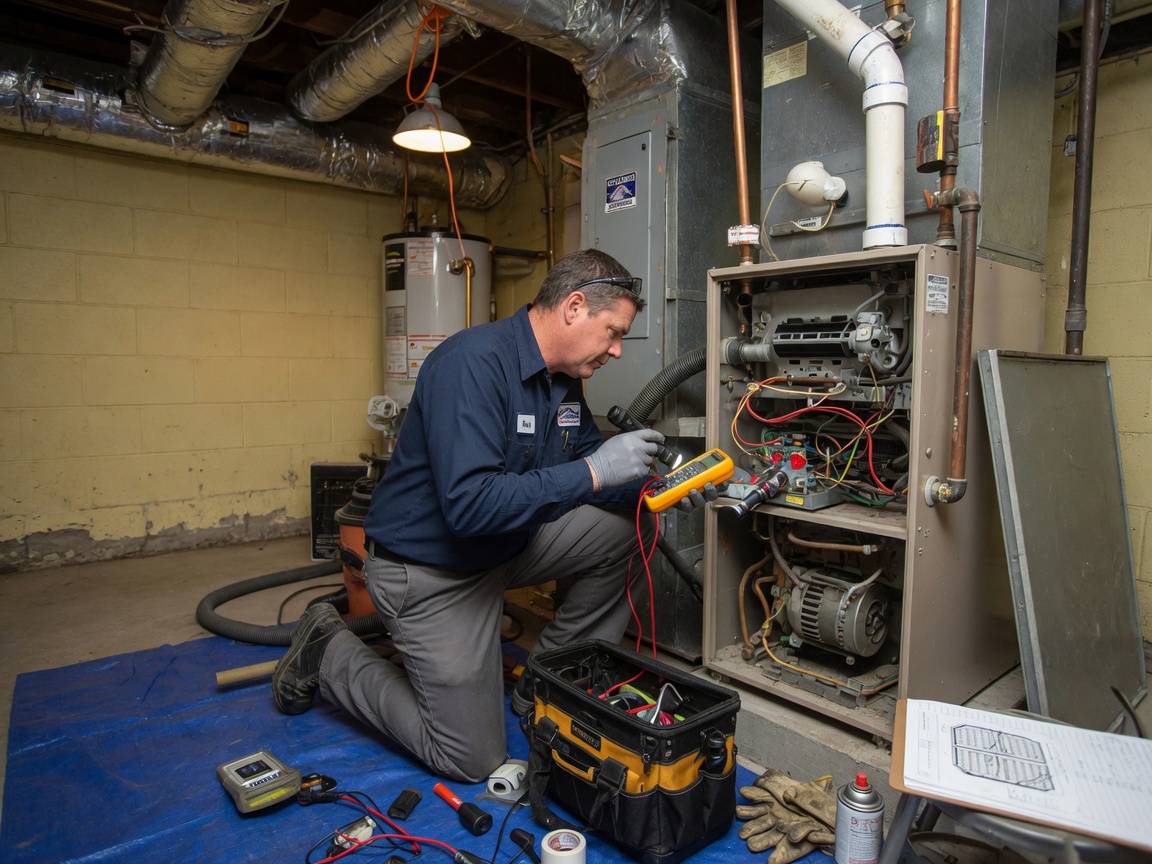
Loveland homes in older Downtown neighborhoods often have furnaces from the 1980s or earlier that sit in tight crawl spaces or basements with limited access. Semi-arid summers pull fine dust through returns while heavy snow in Larimer County forces systems to run longer once temperatures drop. During maintenance we pull and inspect the heat exchanger for cracks that develop from repeated expansion in dry air, clean the blower wheel to restore airflow, and check the flue for ice buildup that can back up carbon monoxide. Skipping these steps leaves many Thompson Valley houses with uneven heat and higher utility bills once winter settles in.
Centerra properties built in the last twenty years usually have sealed combustion units paired with variable-speed blowers. We still find condensate drains clogged by mineral scale from local hard water and pressure switches that fail after repeated freeze-thaw cycles near Boyd Lake. A proper heating maintenance visit includes verifying the inducer motor amperage, testing the limit switches under load, and confirming the thermostat anticipator setting matches the actual duct layout that often runs through unconditioned attics. These checks catch small issues before they strand homeowners during a January cold snap.
Fort Collins and Longmont commuters who live in Loveland frequently ask about dual-fuel setups that switch between heat pump and gas furnace. We calibrate the changeover setpoint based on actual local degree-day data rather than factory defaults, then verify the reversing valve and auxiliary heat strips engage correctly. In all cases we leave a written report noting filter size, static pressure readings, and any components nearing end of life so owners can plan replacements before the next storm.
Technician insight
In Loveland the thing that catches most people out with heating maintenance is how quickly fine dust from our semi-arid summers packs the secondary heat exchanger on 90-plus percent furnaces in Centerra homes, dropping efficiency and triggering pressure switch faults once the first real snow arrives.
Clogged Secondary Exchanger In Centerra
A two-stage furnace in a Centerra home was short-cycling on cold mornings. Inspection showed the secondary exchanger passages blocked by summer dust and scale. After cleaning and re-testing combustion we restored full airflow and the unit ran through the rest of the winter without further issues.
Heating Maintenance Services We Offer
✓Furnace Combustion Analysis
Measure CO levels, oxygen, and stack temperature on gas furnaces common in Centerra homes to ensure safe operation through snowy winters.
✓Blower Motor and Wheel Cleaning
Remove dust and pet hair buildup that restricts airflow in older Downtown Loveland systems and restore proper static pressure.
✓Heat Exchanger Inspection
Visually and with cameras check for cracks caused by dry semi-arid air and repeated heating cycles in Thompson Valley residences.
✓Thermostat and Control Calibration
Adjust anticipator settings and verify staging on systems serving homes near Boyd Lake State Park where temperature swings are wide.
✓Flue and Vent Inspection
Clear snow and ice obstructions from vents on Larimer County homes to prevent carbon monoxide backdraft during heavy winter storms.
Heating Maintenance Cost in Loveland, CO
| Service | Typical Range | What Affects It |
|---|---|---|
| Standard Furnace Maintenance | $179–$279 | Most single-stage units in Centerra and Thompson Valley homes |
| High-Efficiency Two-Stage Maintenance | $229–$329 | Includes condensate drain and variable-speed blower checks |
| Heat Exchanger Camera Inspection Add-On | $95–$145 | Recommended for Downtown Loveland homes over 25 years old |
Ranges are typical for Loveland, CO and confirmed with an exact written quote before any work starts.
How it works
- 1
Arrival And Safety Check
Technician arrives at the Loveland address, confirms power and gas shutoffs, and tests for existing carbon monoxide before opening the furnace.
- 2
Component Inspection
Remove panels, inspect heat exchanger, measure blower amperage, and check all safety switches against manufacturer specs for the unit age.
- 3
Cleaning And Adjustment
Clean blower wheel and burners, replace or note filter size, adjust gas pressure if needed, and verify condensate drain flow on high-efficiency models.
- 4
Performance Test And Report
Run the system through a full cycle, record temperature rise and static pressure, then provide a written summary of findings and recommended next steps.
Pricing
Upfront quotes after inspection; price varies by system age, access, and whether additional parts are required.