
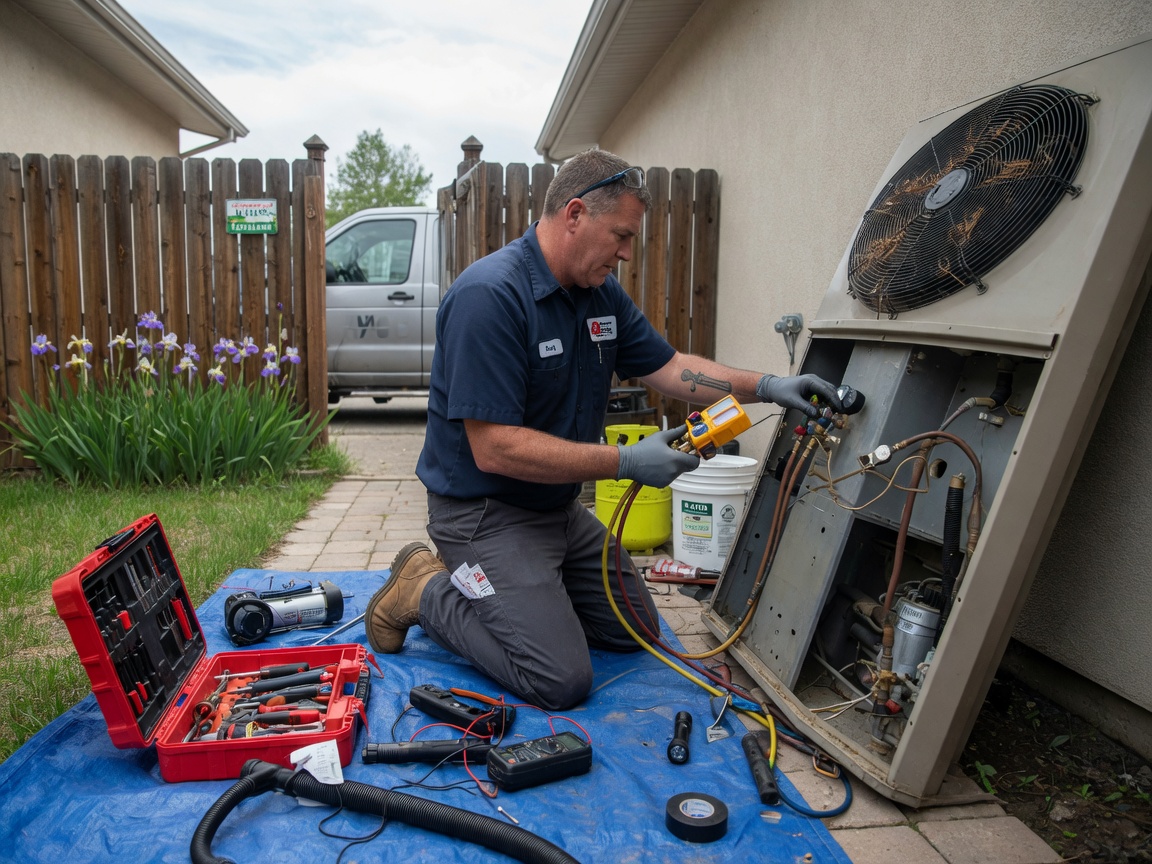
Loveland's semi-arid climate brings intense summer heat that pushes residential AC units hard, especially in neighborhoods like Centerra where newer builds sit alongside older stock from Downtown Loveland. Dust and pollen common to the Front Range settle into coils and filters faster than in wetter climates, reducing efficiency and raising the risk of frozen coils during peak July and August afternoons. Homeowners near Boyd Lake State Park often see extra strain from wind-blown debris off open land.
In Thompson Valley and older sections of Downtown Loveland, many homes built before 1990 still run R-22 systems or early R-410A units that now face part shortages and higher repair costs. Larimer County's wide temperature swings between hot days and cool nights create repeated expansion and contraction stress on compressors and line sets. Technicians here routinely check for vibration damage where units sit on uneven soil or gravel pads rather than concrete.
Emergency calls frequently involve thermostat failures or capacitor issues after sudden evening thunderstorms that roll through from the foothills. These conditions differ from nearby Fort Collins or Longmont because Loveland's slightly lower elevation and more exposed valley locations allow dust to accumulate quicker on outdoor coils. Proper diagnosis always includes checking airflow restrictions caused by local landscaping gravel and cottonwood fluff.
Repair work must account for the county's permitting rules on refrigerant handling and disposal, especially when older units still contain phased-out refrigerants. Skipping these steps risks both equipment damage and compliance problems for the homeowner.
Technician insight
In Loveland the thing that catches most people out with AC Repair is dust loading on coils from the semi-arid climate, especially on units serving homes in Centerra or near Boyd Lake where wind carries extra grit. Older downtown houses often have undersized return ducts that make the problem worse after a repair if airflow is not checked.
Downtown Loveland Home AC Failure
A 1980s home near the Loveland Museum lost cooling during a hot spell. Inspection showed a leaking Schrader valve and heavy dust on the condenser. We replaced the valve, cleaned both coils, and verified pressures matched the unit's original specifications. The system returned to full capacity without further issues.
AC Repair Services We Offer
✓Refrigerant Leak Repair
Locates and seals leaks in line sets common in Loveland homes exposed to temperature swings, then recharges the system to restore cooling capacity.
✓Compressor Replacement
Replaces failed compressors in units strained by hot semi-arid summers, including proper evacuation and matching of new components to existing systems.
✓Coil Cleaning and Restoration
Removes heavy dust and pollen buildup from evaporator and condenser coils that reduces efficiency in Centerra and Thompson Valley properties.
✓Capacitor and Electrical Component Repair
Replaces failing start and run capacitors along with contactors that frequently fail after Loveland's afternoon thunderstorms.
✓Thermostat Calibration and Replacement
Diagnoses and corrects thermostat issues that cause short cycling or uneven cooling in homes with older wiring common downtown.
AC Repair Cost in Loveland, CO
| Service | Typical Range | What Affects It |
|---|---|---|
| Diagnostic Visit | $95–$150 | Waived if repair is approved same day |
| Refrigerant Leak Repair | $250–$650 | Depends on leak location and refrigerant type |
| Compressor Replacement | $1,400–$2,800 | Varies by unit size and accessibility |
| Coil Cleaning | $150–$300 | Higher for heavily soiled units near open land |
Ranges are typical for Loveland, CO and confirmed with an exact written quote before any work starts.
How it works
- 1
Initial System Assessment
Technician arrives and inspects the full system, checking pressures, electrical readings, and airflow while noting any local dust or debris impact.
- 2
Diagnostic Testing
Runs targeted tests on compressor, coils, and controls to identify the exact failure point without unnecessary part replacement.
- 3
Repair Execution
Completes the required fix, whether leak sealing, component swap, or cleaning, using parts matched to the unit's age and refrigerant type.
- 4
Performance Verification
Restarts the system, confirms proper operation, and reviews findings with the homeowner before leaving the site.
Pricing
Upfront quotes provided before any repair work begins.